Most advice about welding automation is written for plants with ten welders and a budget. If your shop is three welders and a cutting bed, the maths is different — and a welding carriage is usually the first machine that pays for itself.
A robot cell wants a fenced corner of your shop, an integrator, and someone who can maintain it. A welding carriage wants 2 square metres of bench, a power socket for the control box, and the MIG welder you already own. That is the whole infrastructure.
The economics for a small shop are about consistency more than speed. A good welder lays a fine bead — on hour one. By hour six of a long repetitive seam, travel speed drifts, starts get sloppy, and rework appears. A carriage holds the same speed, the same oscillation and the same start at 7 a.m. and 7 p.m.
Start with one machine on the one job that repeats most: the long fillets on frames, the panel seams, the pipe circumferentials. Everything else stays manual, exactly as it is.
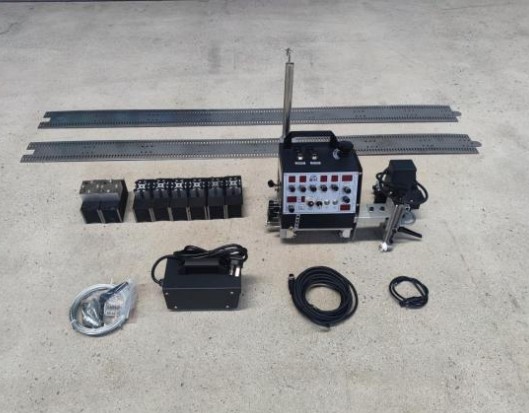
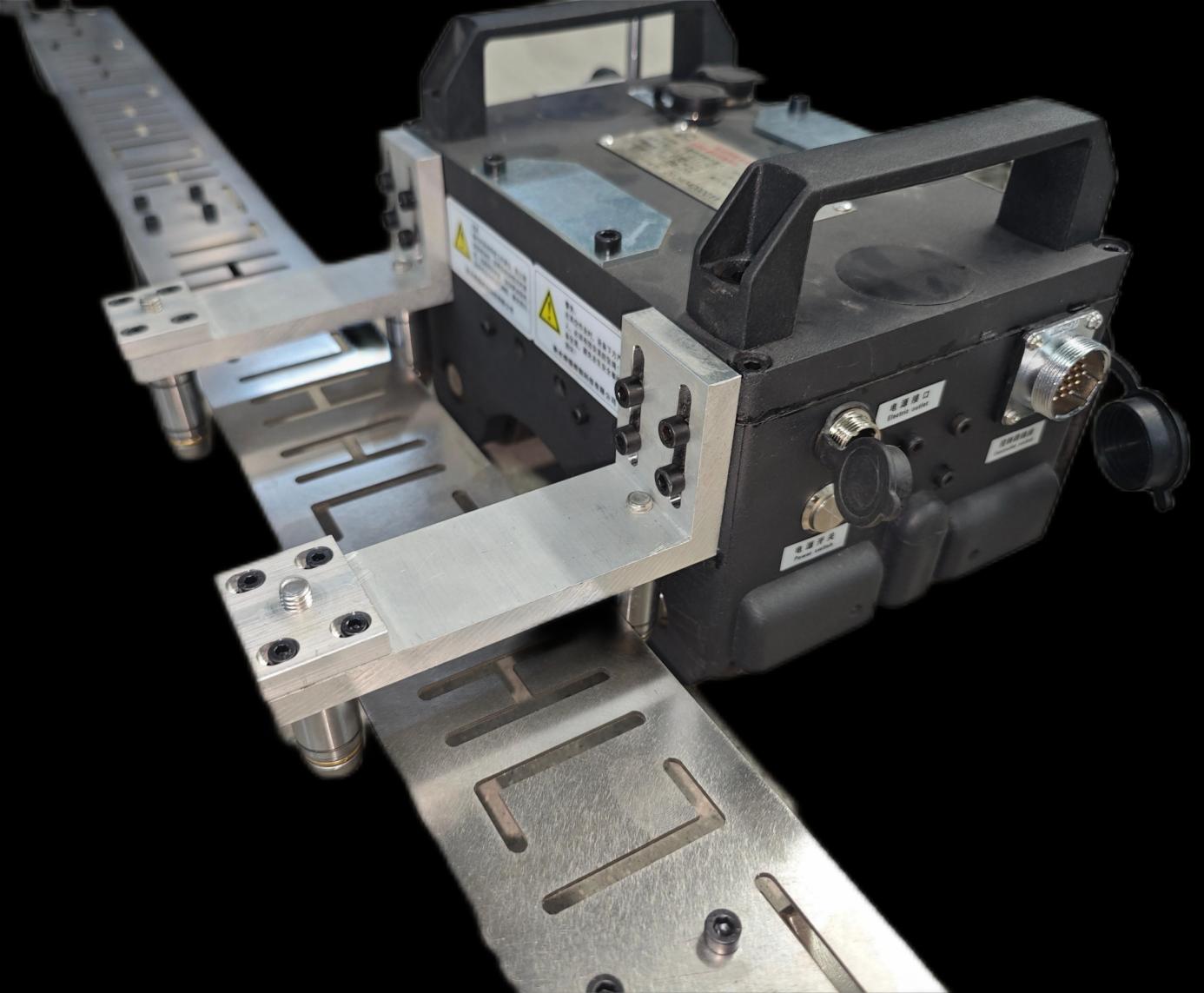
The shortlist we actually walk through with small-shop owners on the first call.
| The recurring job | Series | What changes | What does not |
|---|---|---|---|
| Frame & stiffener fillets, 3–8 mm | JJ / GJ corner carriage | Clamp once, weld unattended; consistent leg size | Fit-up quality — still your responsibility |
| Panel & plate long seams | ZG straight track | Up to 1100 mm/min travel, one setup for metres of seam | Tack quality determines the result |
| Tank & vessel shells | RG flexible track | Follows curves above Ø1800 mm without re-rigging | Surface cleanliness for track grip |
| In-place pipe (Ø108+) | CX crawler | No rotator, no table — it climbs on | Root pass discipline — same as manual |
| One-off brackets and repairs | Keep it manual | — | Rigging time would eat the gain — and that is fine |
A useful target for a first month: pick the job where welders spend more than 30% of their time on one repeating joint type. That is where one carriage visibly shifts the whole week's output.
Send a photo of the job that repeats most in your shop. We will tell you honestly whether a carriage fixes it — or not, and what to do instead.