Little Gecko® welding carriages · Engineering, QC & worldwide export from Beijing, China
Home / Applications / Pipe Welding

Pipe Welding Robot — Circumferential Seams Without a Jig

Going around a pipe is where manual welding gets hardest — the position changes, gravity changes, the bead changes. A magnetic crawler just keeps walking, and penetration stays constant around the full circle. That is why a pipe welding carriage here is a trackless magnetic crawler: the pipe stays where it is, the carriage does the travelling.

Pipe Welding

Magnetic wheels grip the pipe directly — mount in minutes

Circumferential pipe welds force the welder through flat, vertical and overhead positions in one joint. Bead quality drifts as gravity fights the pool. A crawler welding robot grips the steel with magnetic wheels and carries the torch around the seam at constant speed and angle — no turning roll, no jig, no position change for the operator.
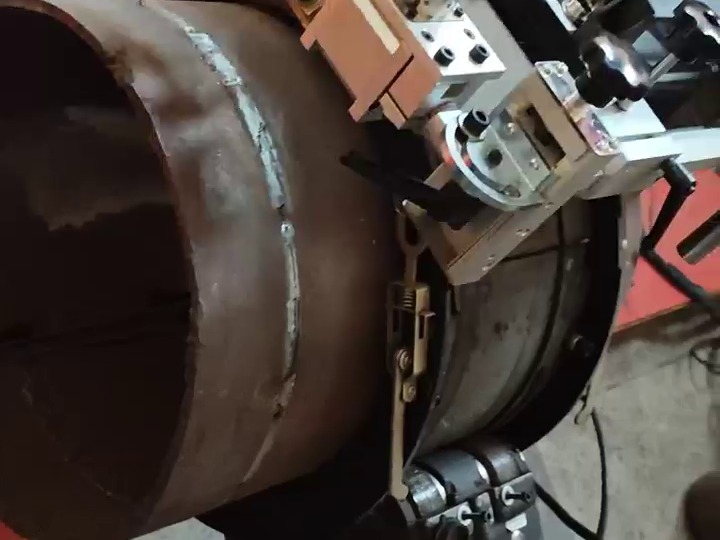
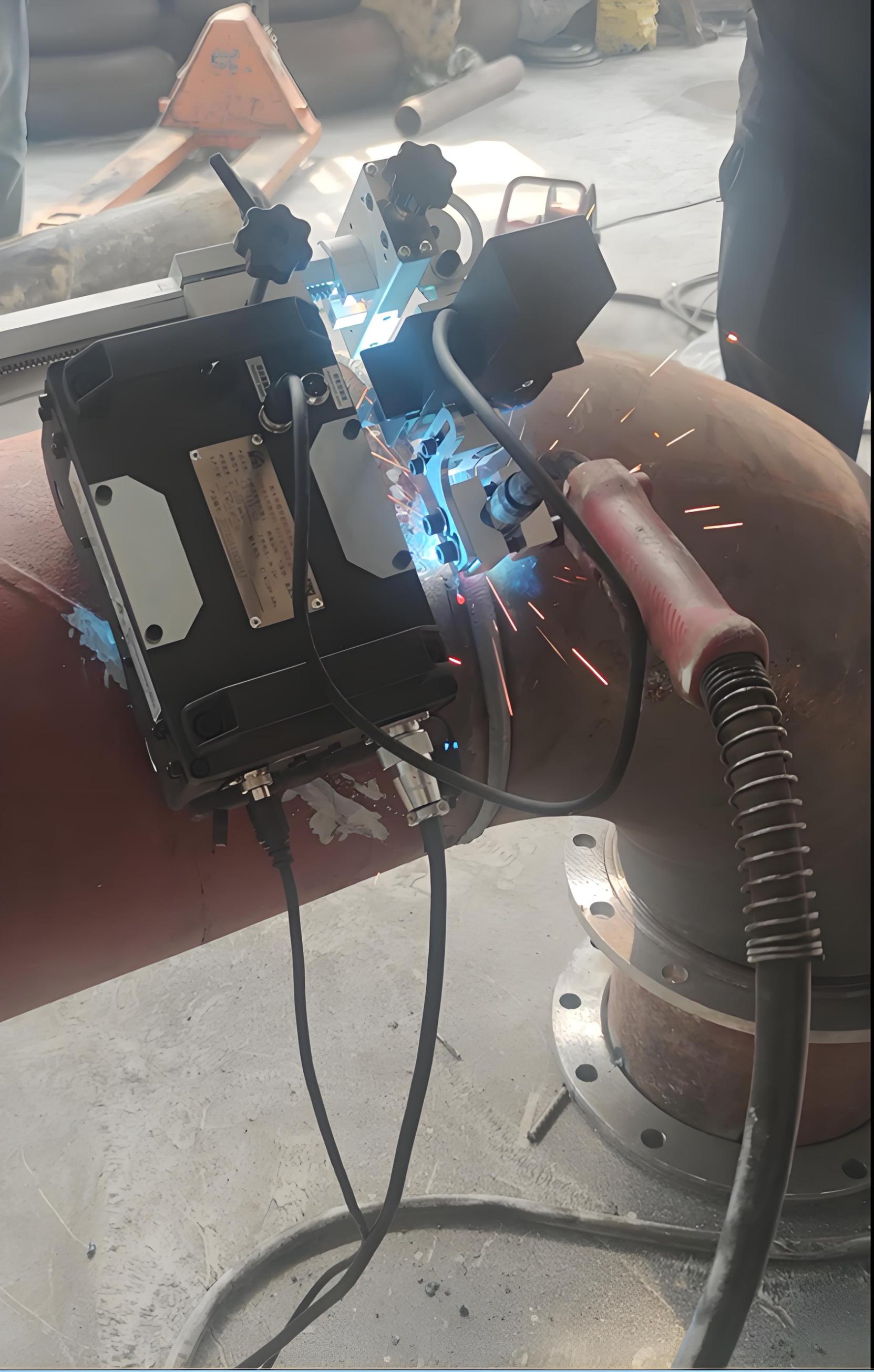
  • Circumferential seams on pipes, shells and vessel sections
  • Carbon steel Ø108–700 mm as standard, larger with the optional track
  • Inner-shell welding from Ø700 mm; works with or without a turning roll
  • Optional anti-drift fixture locks the torch on the seam line for the full circle
What we recommend: CX-III-Q1 magnetic crawler — angle-swing version for round seams, optional anti-drift fixture for long seams, optional magnetic track above Ø700 mm. Straight-swing version for longitudinal welds on large pipe sections.
The difference: The magnetic wheels grip the curved surface directly — no jig, no clamp, minutes to position. Penetration stays consistent around the full circle instead of drifting between flat, vertical and overhead positions.
See the CX Magnetic Crawler
CX magnetic crawler welding inside a large pipe — real photo Magnetic welding carriage on pipe — circumferential seam
Seam Types We Cover

Which Carriage Welds What in Pipe Welding

Typical joint / seamRecommended machine
Circumferential seams on pipe & shellCX-III-Q1/J-W magnetic crawler, angle swing
Longitudinal seams on large pipe sectionsCX-III-Q1/Z-W with optional track
Inner-shell circumferential welds (from Ø700 mm)CX magnetic crawler
Full-circle welds paired with a turning rollCX crawler + oscillator kit
Watch It Work

Magnetic Crawler Pipe Welding — Real Footage

CX magnetic crawler welding a pipe / shell circumferential seam
FAQ

Pipe Welding Welding — Common Questions

What is the smallest pipe it can weld around?
Outer diameter from Ø108 mm. Minimum suction thickness is 3 mm of magnetically permeable steel — the wheels need bare metal under them, so coated pipe must be cleaned along the travel path. Below Ø108 mm, a lathe-style rotary welder is usually the better tool.
Does it need a turning roll?
No — that is the point of the crawler: the machine moves, the pipe stays. A turning roll is only worth adding when you want the workpiece to rotate for other stations; the crawler works with or without one.
How is the seam kept straight around the pipe?
The angle-swing oscillator plus the anti-drift fixture keep the torch centred on the seam line for the full circle. On straight runs the optional magnetic track guides the carriage. Both options are orderable with the machine — tell us your joint mix when quoting.

Welding Pipe Circumference After Circumference?

Send us the pipe diameter range and wall thickness — we will confirm trackless or tracked configuration and quote within 24 hours.

Get a Quote