Little Gecko® welding carriages · Engineering, QC & worldwide export from Beijing, China
Home / Guides / Curved Shell Welding

How to Weld Curved Tank Shells and Large-Diameter Vessels

The moment a seam stops being flat, a rigid track stops being useful. A flexible magnetic track bends with the shell and still gives the carriage a straight, controlled path — which is why curved shells are where flexible-track carriages earn their keep.

The Problem

A curved seam is a straight seam with an extra requirement

On a cylindrical shell, gravity changes as the torch travels, and any rigid track either cannot be laid or holds the carriage off the surface. A flexible stainless-steel belt is held to the plate by strong magnets, follows the curvature, and gives the carriage a controlled path. The torch then travels at a constant speed relative to the joint — which is what keeps penetration even around the shell.
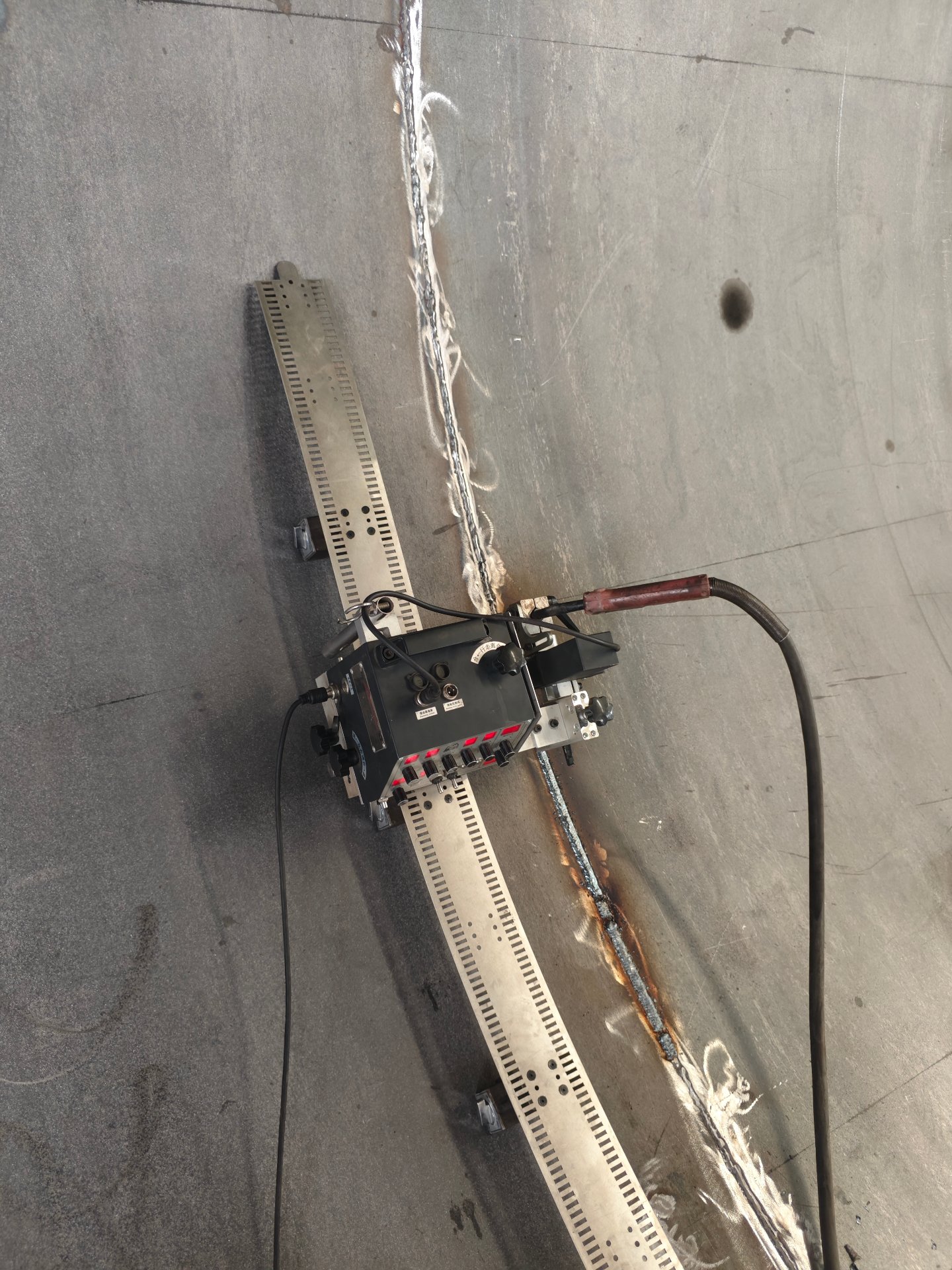
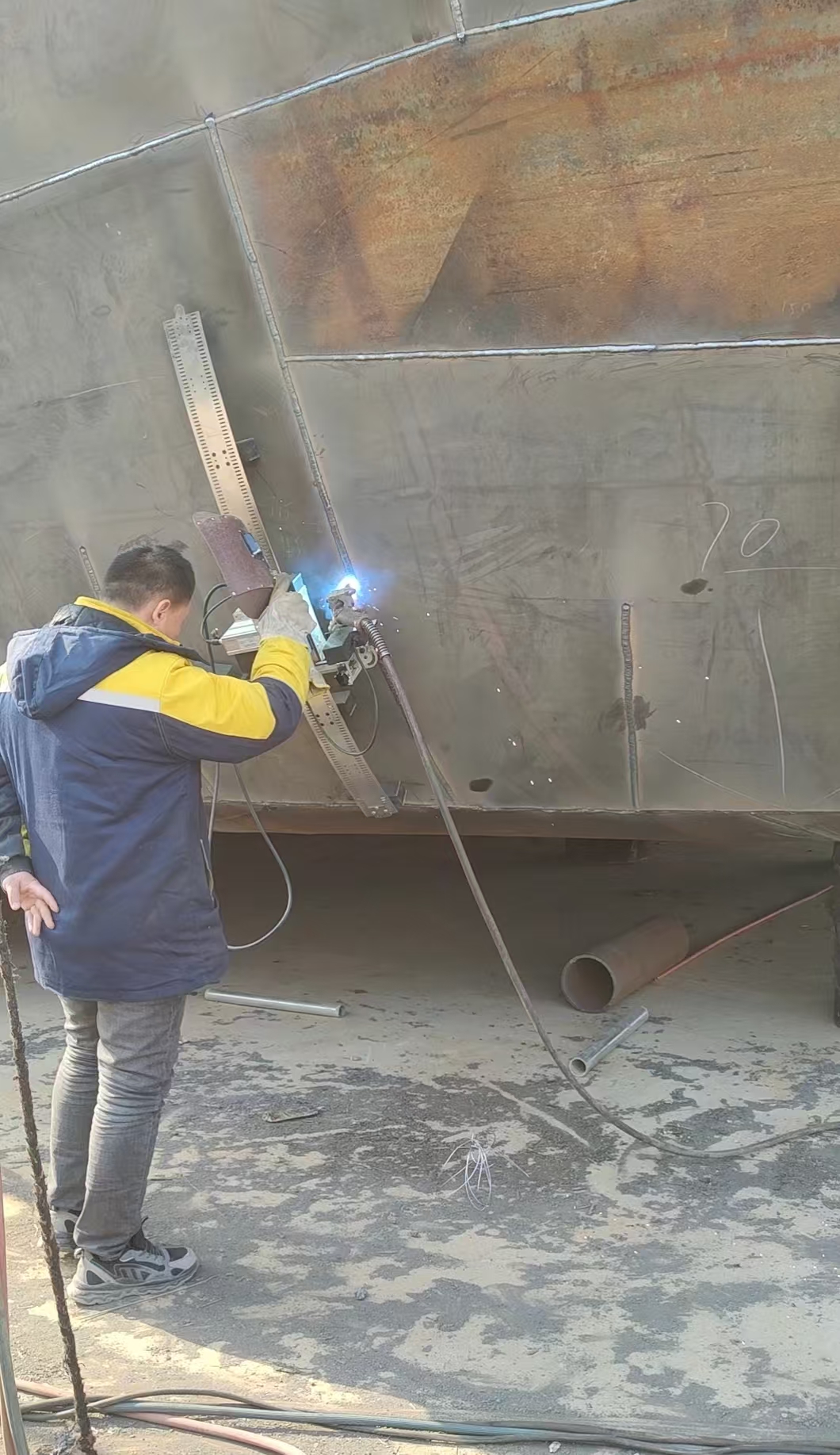
  • Magnetic adsorption on carbon steel from 3 mm plate — inside or outside the shell
  • Travelling outside diameter from Ø1800 mm upward on our RG series
  • Works vertically, horizontally and in flat position; the belt takes the curvature
  • Setup in minutes: no jig, no turning roll, no scaffold
What we recommend: RG series flexible-track carriage for shell long seams, vertical seams and circumferential seams on curved tanks. Where you would rather have no track at all on very large diameters, the CX magnetic crawler walks the seam itself.
See the RG Flexible-Track Carriage
Flexible track welding carriage climbing a curved tank shell Automatic welding carriage working on a curved ship hull panel
Limits & Numbers

What a Flexible-Track Carriage Can and Cannot Do

RequirementPractical answer
Minimum plate thickness for magnetic adsorption3 mm carbon steel; thinner plate needs clamping or a conventional rail
MaterialsCarbon and low-alloy steel directly; stainless and aluminium with clamped track
Travelling outside diameterFrom Ø1800 mm upward (RG series)
Travelling inside diameterFrom Ø2900–3000 mm minimum travelling inner diameter on curved work
Welding speed0–990 mm/min, adjustable, held constant for the run
Surface conditionBare, dry steel along the travel path — remove paint, rust scale, water and heavy oil
Method

Welding a Curved Shell in Four Moves

SET 01

Clean the Path

Magnets need bare metal. Clean a band along the seam where the belt and wheels will sit, and dry it if the shell has been outside.

SET 02

Lay the Belt

Bend the flexible track around the shell and let the magnets hold it, aligned to the seam. Check the line over the full length before welding.

SET 03

Set the Torch

Contact-to-work distance, torch angle and oscillation set once. On vertical seams, hold the same parameters the welder would use — the carriage just repeats them.

SET 04

Weld and Move

Weld the seam, peel the belt off, reposition for the next one. No scaffold, no turning roll and no waiting for a crane to re-orient the vessel.

FAQ

Questions We Get Asked Before the First Quote

What stops the carriage sliding down a vertical shell?
The magnets in the track and the carriage body. On plate from 3 mm the holding force is well above what a carriage of this weight needs, which is why vertical seams on tanks and ship panels are routine work rather than a special case.
Can it weld both inside and outside a vessel?
Yes. Outside is straightforward; inside work needs enough internal diameter for the machine and the operator, and we quote a minimum travelling inner diameter for curved work so you know before you order.
Do painted or galvanised shells work?
Not directly — the wheels and track need magnetically permeable bare steel along the travel path, and paint or zinc coating both reduce grip and contaminate the weld. Clean the band, or use a clamped track where coating must stay intact.
Should I buy a flexible track or a magnetic crawler?
If you mostly weld tanks and shells with a clear position for the belt, flexible track gives the most controlled path. If you want the fastest possible repositioning on large diameters, the crawler with no track is quicker. Many shops keep one of each and use them for different joints.
Keep Reading

Related Pages for Curved Shell Welding

Welding Shells Every Shift?

Tell us your shell diameter, plate thickness and seam type — we will confirm the right carriage and track length, and quote within 24 hours.

Get a Quote