Little Gecko® welding carriages · Engineering, QC & worldwide export from Beijing, China
Home / Blog / Power Supply

Welding Carriage Voltage & Power Supply

The question every overseas buyer asks first: “what voltage does it need?” Here is the exact answer, model by model, and why it travels.

The Short Answer

AC 110–220 V, 50/60 Hz — one unit, the whole world

Every Little Gecko carriage except the tube-to-tubesheet machine runs on a wide-range mains input of AC 110–220 V, 50/60 Hz (±10%). The same unit works on:

  • 110 V grids — North America, parts of Japan, Taiwan
  • 220 V grids — Europe, China, most of Asia and Africa
  • Both 50 Hz and 60 Hz — no switch, no jumper

Internally, the carriage is controlled at a safe DC 24 V. You can ship and run it worldwide without a separate transformer.
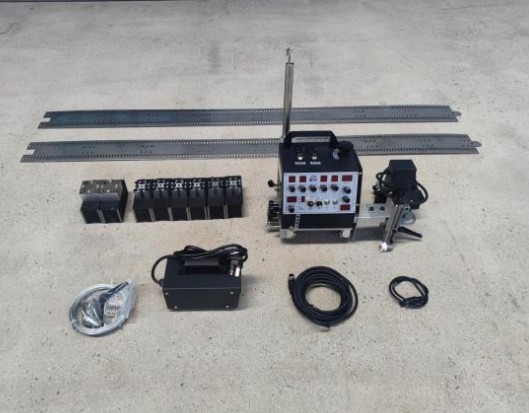
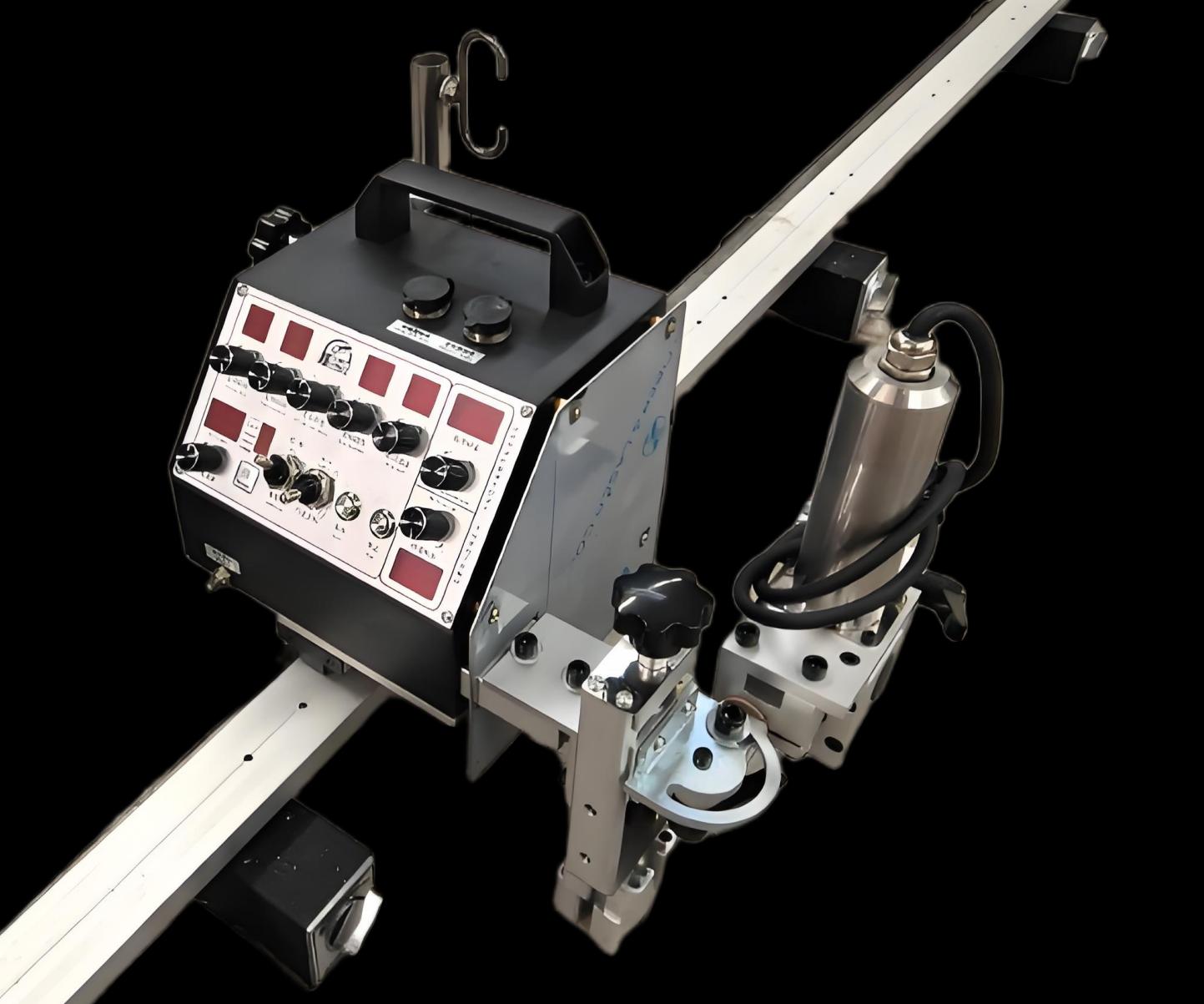
One exception: the tube-to-tubesheet (HLGB) machine uses AC 220 V, 50/60 Hz — it is a cabinet-type unit, not the 110–220 V range. Everything else (RG, ZG, corner-fillet, CX) is 110–220 V.
Welding carriage kit with control box running on wide-range input Straight-rail welding carriage
What This Means

Carriage Power vs Welder Power — Two Different Things

A common mix-up: the carriage's input is small. The big power draw is your welding machine.

The carriage only needs the 110–220 V control supply described above — it drives motors, the oscillator and the controller. It draws a few tens of watts. That is why it is happy on almost any wall outlet.

Your welding power source is a separate machine with its own input, which follows your local supply (often 220 V or 380 V three-phase for industrial MIG/MAG). The carriage does not change that — it simply triggers your welder through a two-pin ignition lead and rides along the seam.
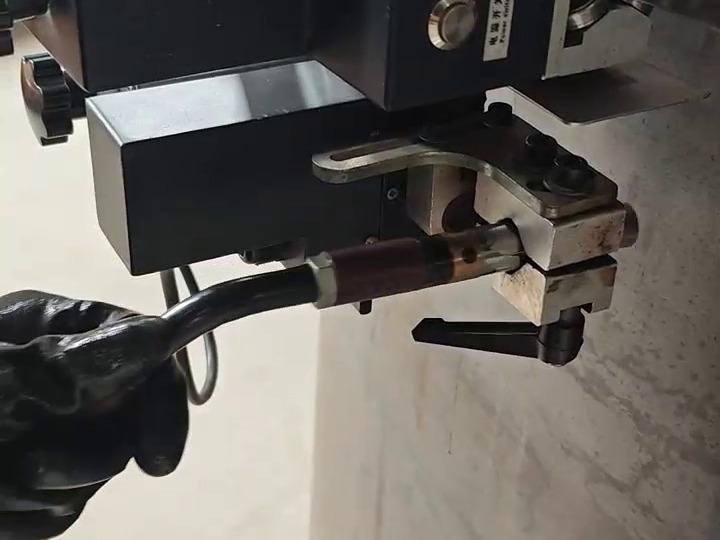
In one line: the carriage plugs into any 110–220 V outlet; the welder plugs into your shop supply as it always has. They are independent.
Carriage control box connected to an existing MIG/MAG welder Welding carriage and power source as separate units
By Model

Power Supply, Model by Model

ModelExternal power supplyControl voltage
Flexible-track (RG)AC 110–220 V, 50/60 Hz (±10%)DC 24 V
Straight-rail (ZG)AC 110–220 V, 50/60 Hz (±10%)DC 24 V
Corner-fillet (single & dual torch)AC 110–220 V, 50/60 Hz (±10%)DC 24 V
Magnetic pipe (CX)AC 110–220 V, 50/60 Hz (±10%)DC 24 V
Tube-to-tubesheet (HLGB)AC 220 V, 50/60 Hz (±10%)DC 24 V

Ambient range for all models: –20 to +60 °C, 0–90% relative humidity. The ±10% tolerance means normal site voltage fluctuation is fine.

FAQ

What Buyers Ask About Power

Do I need a transformer or voltage converter?
No, for the RG, ZG, corner-fillet and CX carriages — they accept 110–220 V automatically. Only the HLGB tube-to-tubesheet machine needs 220 V, so check your site before quoting that one.
Does it work on 60 Hz (North America) and 50 Hz (Europe) both?
Yes. All models accept 50 Hz and 60 Hz. There is no frequency switch to flip.
Is the carriage safe to handle on the workpiece?
Yes. The control and drive circuit runs at DC 24 V low voltage, not mains voltage, so the part you touch and mount on the steel is safe.
Does the carriage need compressed air or three-phase power?
No three-phase is needed for the carriage itself. Only the suction-cup track variant (for stainless / aluminium) uses venturi vacuum from a compressed-air line. The control box is powered from the 110–220 V supply above.
Keep Reading

Related Pages on This Site

Tell Us Your Site Voltage

Send your local supply (110 V / 220 V, 50 / 60 Hz) and we confirm the right model — most need no converter at all.

Get a Welding Solution