Little Gecko® welding carriages · Engineering, QC & worldwide export from Beijing, China
Home / Blog / Fillet Welding

Can a Welding Carriage Weld Fillet (Corner) Joints?

Short answer: yes. A welding carriage is one of the most reliable ways to make fillet welds on box beams, stiffeners and structural corners — steadier than a hand, and far less tiring over a long run. Here is what it takes and which model fits which job.

The Short Answer

A carriage is built for exactly this — and we make one just for fillets

A fillet weld is the right-angle joint you find wherever two plates meet at 90°: box beams, stiffeners, brackets, the inside corners of frames. It is the most common weld in structural and fabrication work, and it is exactly where a carriage earns its money — constant speed and a steady weave produce a uniform leg length every time.

We make a dedicated corner-fillet welding carriage (the Little Gecko® fillet series) that rides the corner and lays a consistent fillet automatically. Our other families — flexible rail, straight rail, magnetic pipe — also run fillet welds with the right torch set-up.
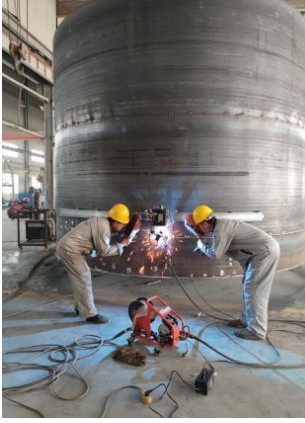
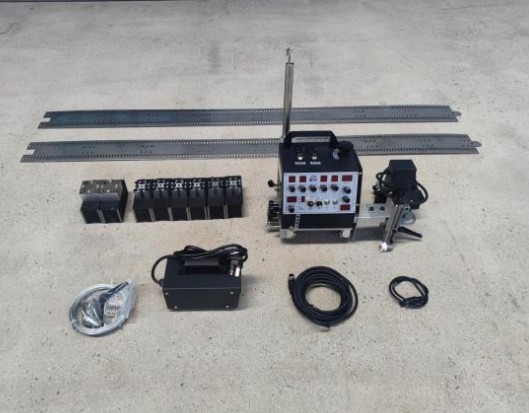
  • Box beams and stiffeners (T-joints, lap joints, inside corners)
  • Open-edge fillets and lap fillets on plate and sections
  • Both sides of a box section in one pass on the dual-torch model (workpiece width 400–800 mm)
  • Thickness from 3 mm upward on magnetic fixing; confirm material when quoting
Why it beats hand welding: a man tires after a few metres; a carriage holds the same travel speed, weave width and dwell for the whole shift, so the leg length stays within tolerance from the first inch to the last.
Fabrication shop fillet welding work that a welding carriage automates Welding carriage kit used for automated fillet welds
Which Models

Every Little Gecko Family Can Do Fillets

The difference is how, and how much setup. Pick by your joint and your volume.

FamilyFillet capabilityBest for
Corner-fillet carriage (single-torch)All-position filletBox beams, stiffeners, corners — any position
Corner-fillet carriage (dual-torch)Flat / horizontal fillet, both sides at onceLong straight box runs, 400–800 mm wide
Flexible-track (RG)Fillet with right gun, all-positionCurved shells, tanks, vessels
Straight-rail (ZG)Fillet with right gun, long seamsFlat plate, panels, long box beams
Magnetic pipe (CX)Fillet / circumferential on pipesPipe, tube, circular work

Tell us your joint type, plate thickness, and whether the weld is inside a box or on an open edge — we will point you to the right model and oscillation settings.

Single vs Dual Torch

One Gun or Two? It Decides Position and Speed

The corner-fillet family comes in two layouts, and the difference matters for what you can weld.

Single-torch: the all-rounder. It welds fillets in flat, horizontal and vertical positions, so it covers corners on the floor, on a wall, or overhead. Choose it when your fillets are not all horizontal.

Dual-torch: two guns mounted on the same carriage, welding both sides of a box section in a single pass. It is fast — you weld two fillets where a single-torch welds one — but because both guns must stay level, it is flat / horizontal only. It is built for long, straight, mostly-horizontal box runs 400–800 mm wide.
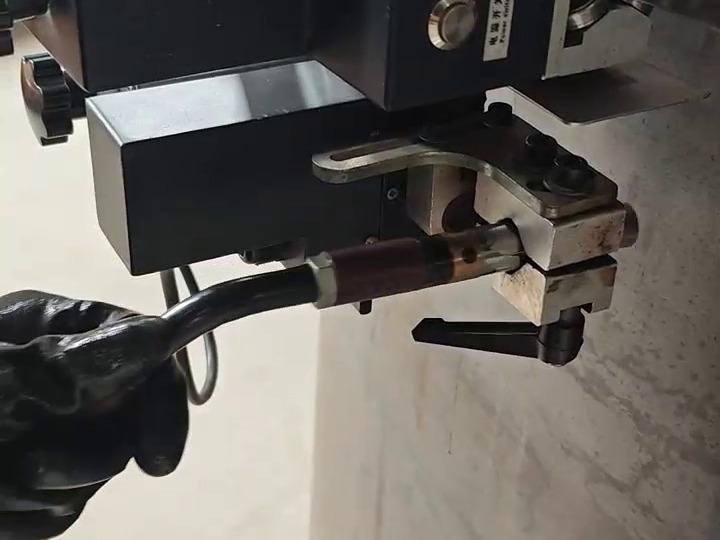
Rule of thumb: mostly-horizontal long box runs → dual-torch for speed. Any vertical fillets, or mixed positions → single-torch. See all-position vs flat-only carriages for the full breakdown.
Welding torch in the universal fixture of a fillet welding carriage Corner-fillet welding carriage kit
How to Choose

Send Us Four Things, Get the Right Model

You do not need to know the model number. Tell us the job and we match it.

FAQ

What Buyers Ask About Fillet Welding

Can the straight-rail or flexible-track carriage weld fillets?
Yes. With the right torch set-up and oscillation settings, both the ZG straight-rail and RG flexible-track carriages run fillet welds — the dedicated corner-fillet carriage simply makes the corner geometry easier and offers the dual-torch option for both-sides-at-once speed.
What plate thickness can a fillet carriage handle?
Magnetic-track fixing works from 3 mm thick clean steel. For stainless or aluminium, specify suction-cup fixing instead of magnets. Very thick sections are no problem — tell us the range and we size the oscillator swing and dwell.
Do I need special wire or gas?
No. The carriage drives a standard MIG/MAG (GMAW) torch — use the wire and shielding gas you already run. It does not support stick electrodes, because a hand-fed electrode cannot be fed at a constant rate.
Will it work with my existing welder?
Yes. The carriage takes over your MIG/MAG power source, wire feeder and torch through a two-pin ignition control lead. Nothing in your welder is modified — remove the lead and it welds manually again.
Keep Reading

Related Pages on This Site

Tell Us Your Fillet Job

Send a photo of the joint and the plate thickness. We confirm the model and oscillation settings before you order — single or dual torch, your call.

Get a Welding Solution