“Tank welding machine” is not one product. On a typical storage tank you deal with three different seam types, and each has a matching automatic solution:
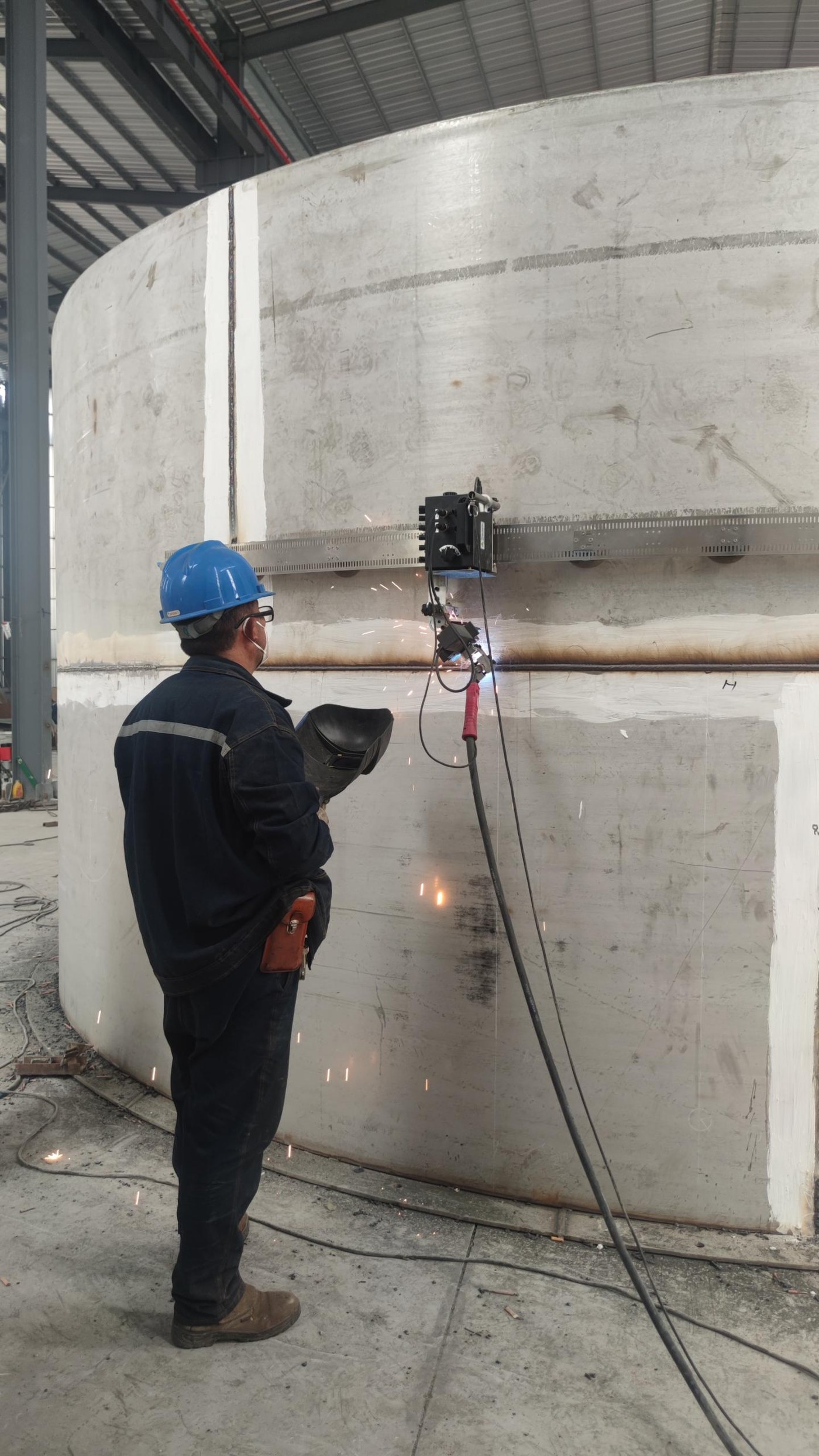
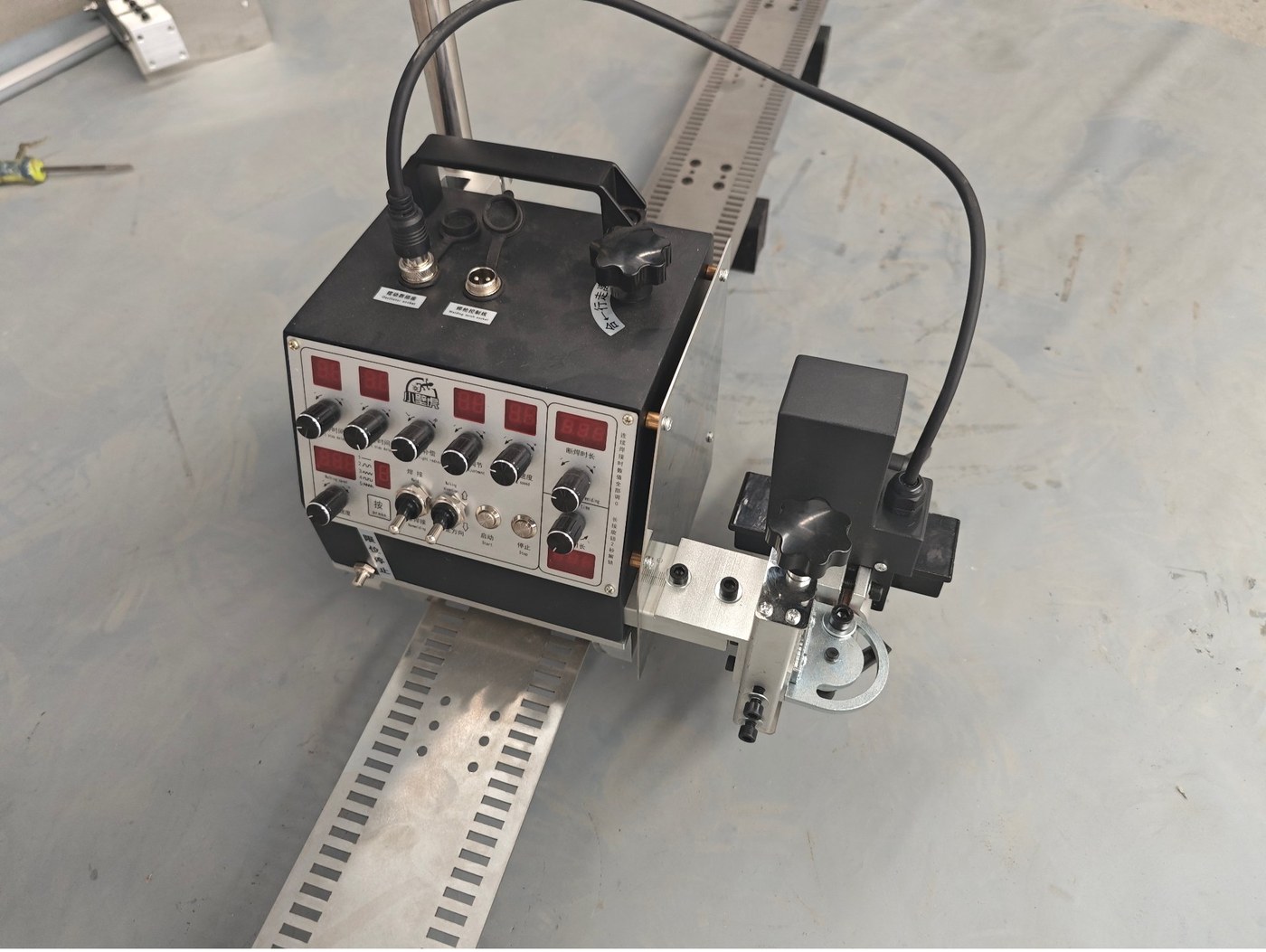
| Machine | How it holds on | Best tank seam | Welding positions |
|---|---|---|---|
| Flexible-track (RG) | Flexible belt track with magnetic blocks | Vertical shell seams & curved or straight seams on the shell | Single torch: all positions |
| Straight-rail (ZG) | Rigid straight rail, magnetic or clamp fixing | Long straight seams on flat plate and box beams | Single torch: all positions |
| Magnetic crawler (CX) | Magnets directly on the steel | Circumferential seams on pipes, nozzles and tank shells | Single torch: all positions |
| Corner-fillet (JJ) | Clamps / magnetic wheels on the corner | Fillet welds on stiffeners and flat attachments | Single torch: all positions · dual-torch: flat & horizontal only |
Position discipline: every single-torch model is a true all-position machine — flat, horizontal, vertical and overhead. Dual-torch corner-fillet models weld flat and horizontal fillets only; the twin torches must stay level, so vertical work always goes to a single-torch unit.
Magnetic track blocks and magnetic crawlers need ferromagnetic steel. For stainless or aluminium shells, the flexible-track system is offered with a suction-cup fixing variant — venturi vacuum cups fed by a compressed-air line hold the track where magnets cannot. Tell us the shell material when you request a quote and we configure the track accordingly.
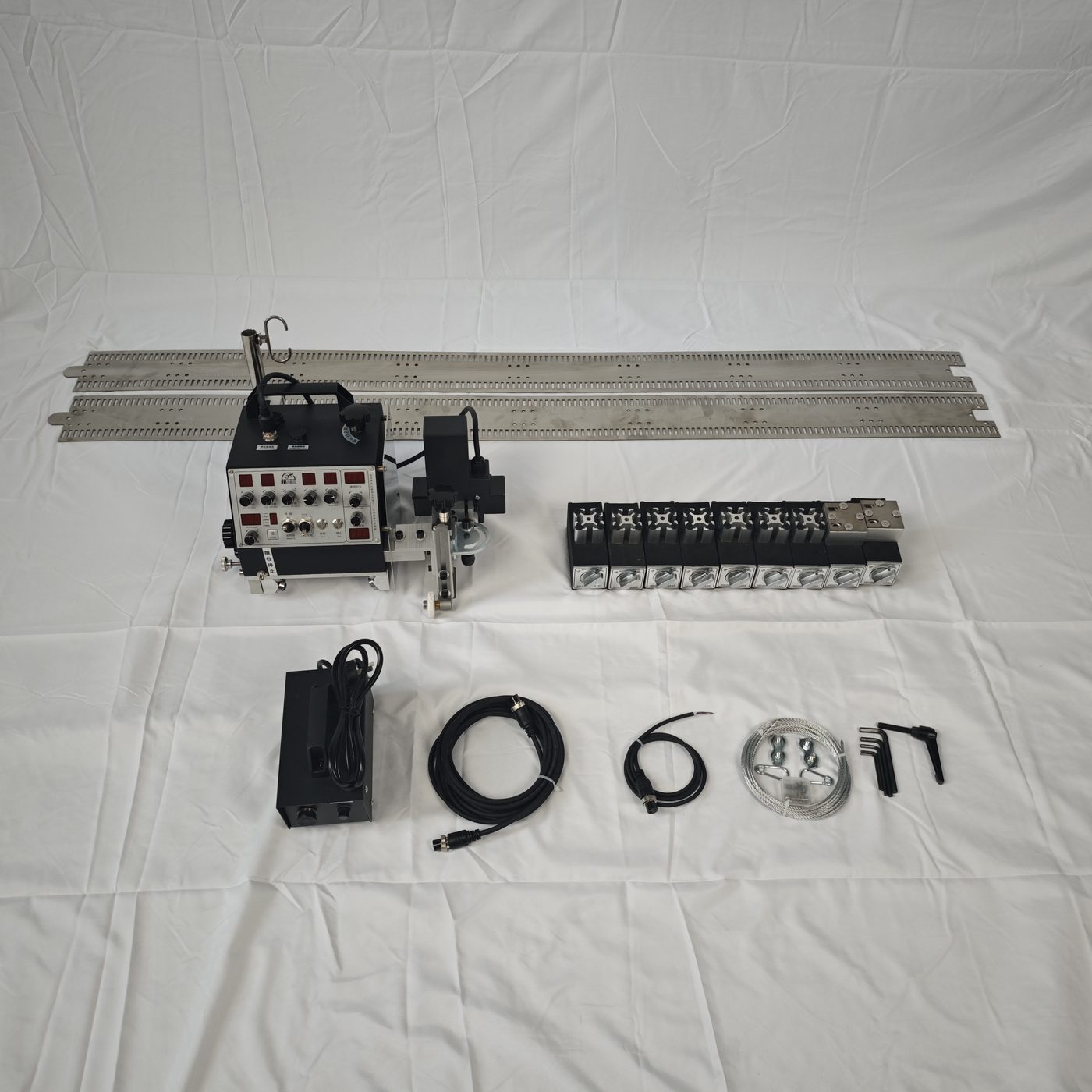
A welding carriage keeps constant travel speed and constant torch angle from the start of the seam to the end. On tall shells that means: no bead widening as the welder tires, no under-cut on hard-to-reach passes, and no re-welding to fix a rushed section. Over-welding drops, so filler wire consumption drops with it.
The human gains too: the operator stands beside the carriage instead of following the torch up a scaffold, away from fume and arc flash for most of the pass — and one operator can mind more than one unit at once.
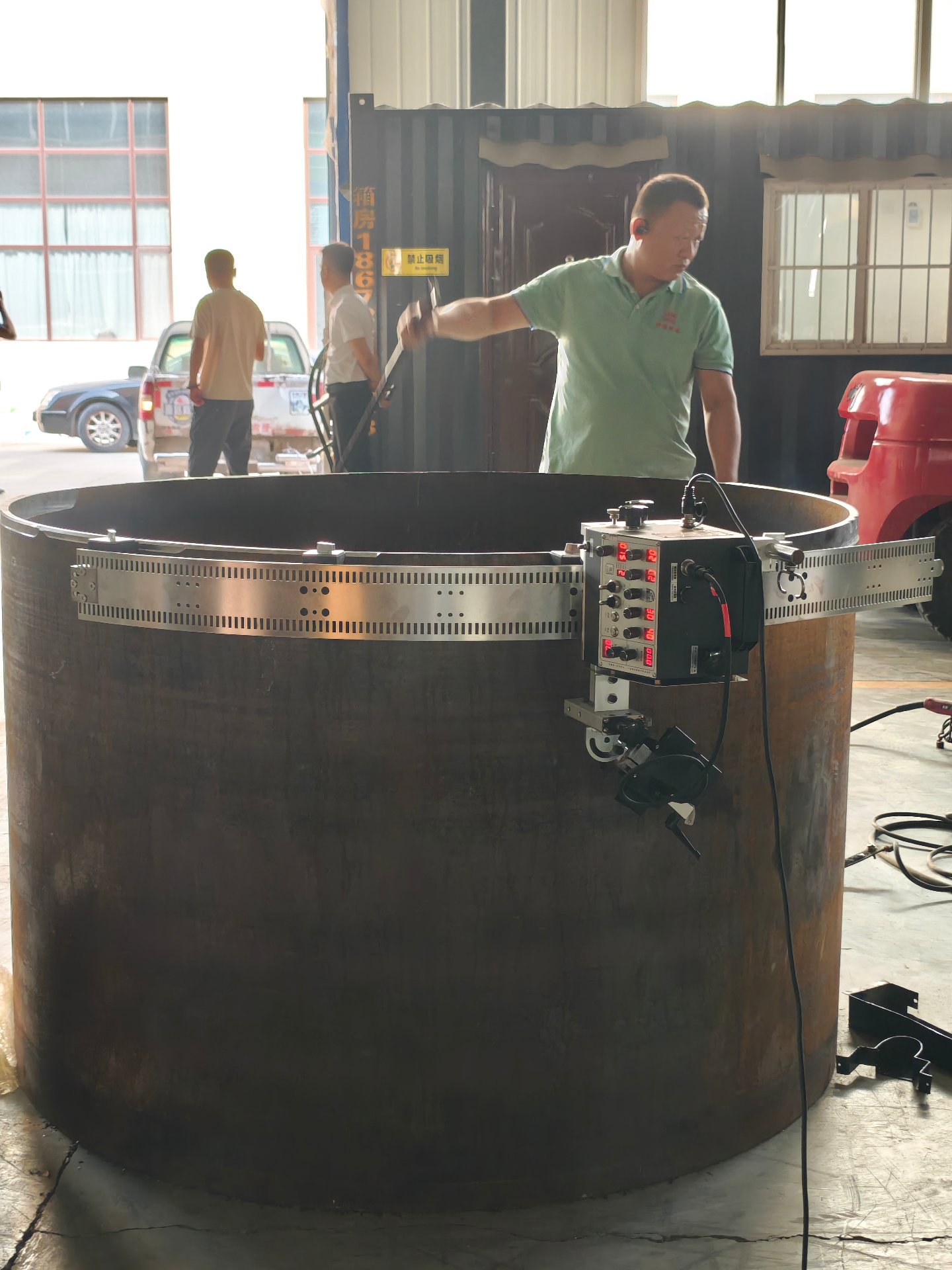
To keep quotes honest: the machine box contains the carriage, its track system, oscillator and control box. The welding side stays yours.
In the box: carriage body, oscillator, track (flexible belt or rigid rail with fixings), control box, cables and tools.
You supply: the MIG/MAG welding power source, the torch, the wire feeder, the welding wire and the shielding gas — four items, every time. The carriage triggers your welder through an ignition lead and rides the seam.
Power input for the carriage itself is AC 110–220 V, 50/60 Hz (±10%) with DC 24 V control — it runs from a normal site outlet anywhere in the world.
Tell us the tank diameter, shell thickness and which seams you want automated — we reply with the machine combination and a factory-direct quote.