Don't start from model numbers - start from your job. Answer seven quick questions below and this page will point you to the right machine.
In a hurry? Send a photo of the joint on WhatsApp and our engineers will recommend the model for you.
A welding carriage is a motorised trolley that carries the welding torch along a joint at a controlled travel speed. It holds the torch at a fixed angle and distance while your own power source does the welding - the operator sets the parameters instead of steering the torch by hand.
That single change is what a fabricator is actually buying: the bead stops depending on who is holding the torch at 4 pm on a Friday. The carriage travels at a constant speed, oscillates to the width you set, and can be left to run while the welder prepares the next joint.
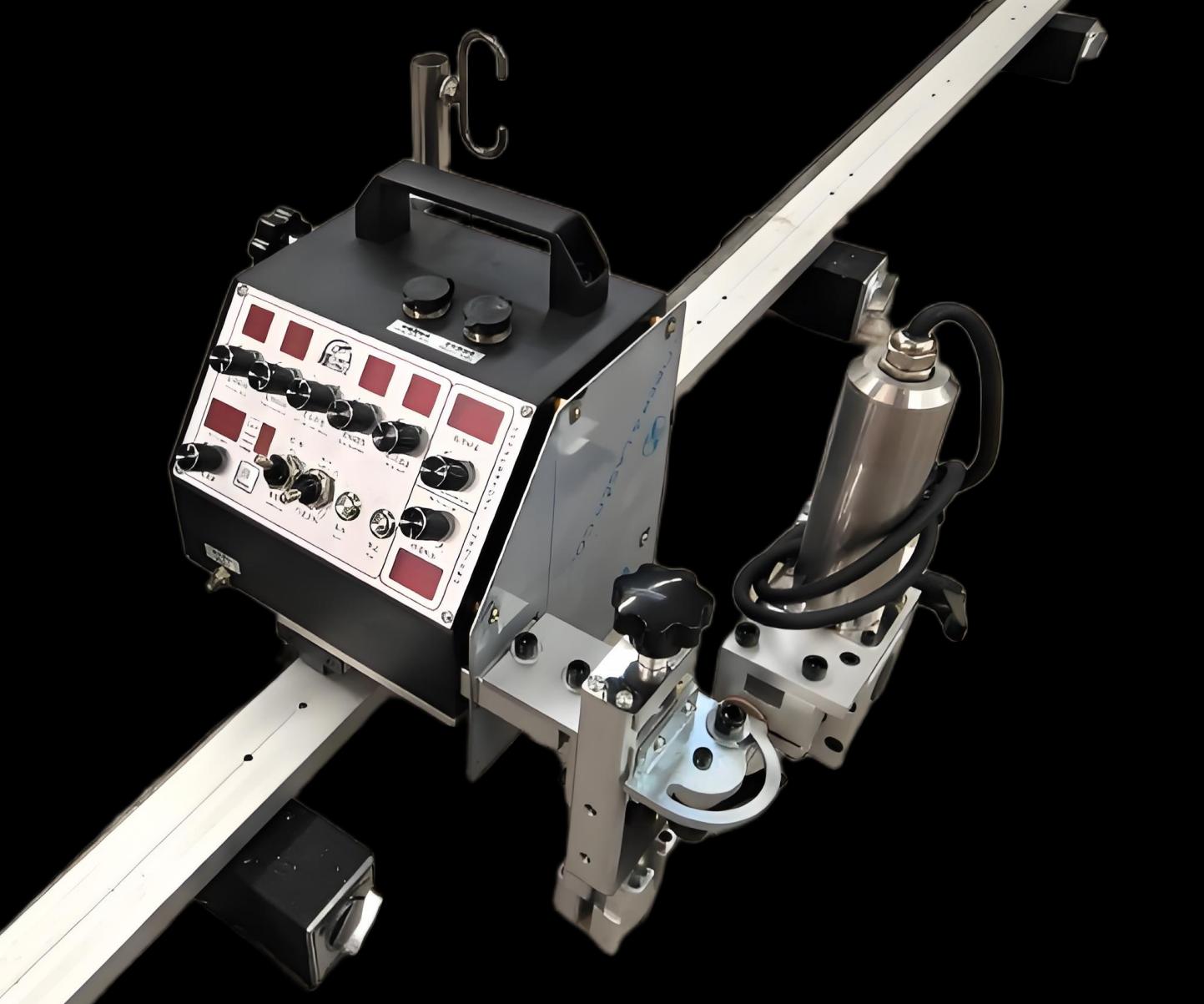
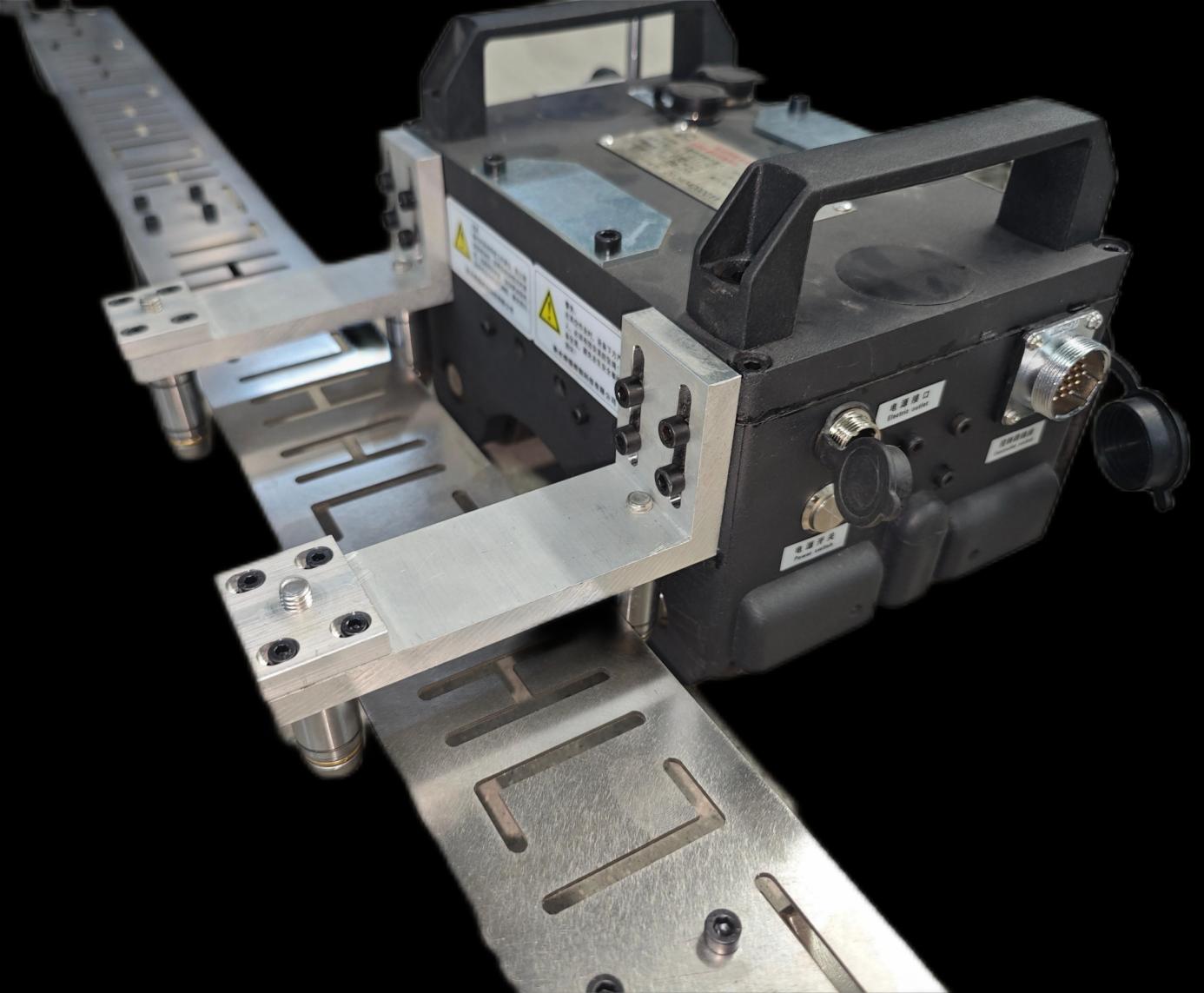
Four practical groups, sorted by the welding position you actually work in - trackless magnetic, track-guided, flexible track and fillet. The full type-by-type comparison is in the table below.
Column webs, ship panels, vertical stiffeners. Needs magnetic adhesion - a magnetic welding carriage or the magnetic-track version of RG / ZG.
JJ / GJ · RG magnetic · ZG magnetic HorizontalLong straight seams on plate, tank shell courses and panels. The easiest position - a rail welding carriage or welding tractor does it at constant speed.
ZG · RG · CX OverheadTank roofs, ceiling plates, underside stiffeners. Only magnetic adhesion holds the torch reliably - specify a magnetic version, or go trackless.
CX magnetic crawler · RG / ZG magnetic CurvedTank shells, vessel bodies, pipe spools. Either the flexible track follows the curve, or a crawler walks it with no track at all.
RG flexible track · CX crawlerThe table buyers ask for: what each type of welding carriage is best for, which welds it covers, the surface it runs on and where it is typically used. Find your row, then click through to the series.
| Welding Carriage | Little Gecko Series | Best For | Welding Type | Surface | Typical Application |
|---|---|---|---|---|---|
| Magnetic Welding Carriage | CX · magnetic RG / ZG | Steel structures, vertical work | Fillet / Butt | Vertical / Horizontal | Tanks, steel structures |
| Track Welding Carriage (welding tractor) | ZG · RG | Long straight welds | Butt / Fillet | Flat / Horizontal | Panels, beams |
| Pipe Welding Carriage | CX-W | Pipe & cylinder welding | Circumferential | Pipe surface | Pipelines, tanks - from Ø108 mm |
| Multi-Function Carriage | JJ / GJ + CZ side mount | Flexible fabrication work | Multiple | Multiple | Fabrication shops, mixed work |
| Crawler Welding Robot | CX trackless | Long & repetitive welds | Continuous welding | Complex surfaces | Heavy fabrication |
Naming note: the table uses the names buyers search for - the same machines carry several of them. The CX is both a magnetic welding carriage and a crawler welding robot (it grips with magnet wheels and needs no track); the ZG is the classic track welding carriage, also sold as a welding tractor. Not sure which row is yours? Use the selector below or send us the joint photo.
Five steps, in the order a welding engineer would ask them. Work down the list and you will land on one or two candidate machines - then use the selector below to confirm.
Application → recommended carriage → why. Find your industry and read the machine our engineers would quote for it - and the reason it fits the seam.
Suitable for continuous welding on large steel surfaces - longitudinal and circumferential seams on shell courses and tank roofs, with nothing to rig on a finished shell.
See tank welding setups →H-beam, box beam and column fillet welds. Dual-torch versions weld both fillets in a single pass, so one setup replaces two.
See steel structure welding →Long vertical and horizontal butt seams on hull and deck panels, where the flexible track follows the plate and the crawler takes the seams no track can reach.
See shipbuilding welding →Circumferential seams on pipe spools from Ø108 mm - the machine grips the pipe and walks the joint, so nothing has to be rigged around the pipe.
See pipe welding set-ups →Vessel bodies and domed ends with the flexible track; tube-to-tubesheet joints in heat exchangers, boilers and condensers with the HLGB automatic machine.
See pressure vessel welding →Thick plate, booms, chassis and machine frames - multi-pass welds that have to stay consistent over long runs of heavy fabrication.
See heavy equipment welding →The short version - the application-to-machine combinations we are asked about most often.
| Application | Recommended solution | Machine type |
|---|---|---|
| Vertical fillet welding | JJ / GJ Fillet Welding Carriage | Trackless magnetic fillet carriage |
| Long straight seam | ZG Straight-Track Welding Carriage | Rail welding carriage / welding tractor |
| Curved surface welding | RG Flexible Track Carriage | Flexible track oscillating carriage |
| Tank shell welding | CX Magnetic Crawler | Crawler welding robot, trackless |
| Pipe welding (circumferential) | CX Magnetic Crawler | Pipe welding carriage from Ø108 mm |
| Heavy plate welding | ZG with twin-rail track | Heavy-duty welding tractor, multi-pass |
| Overhead welding | CX Magnetic Crawler | Magnetic adhesion, all positions |
| Tube-to-tubesheet joints | HLGB25-108 | Automatic tube sheet welding machine |
Terminology note: in Europe and North America the same machine is often called a welding tractor or rail welding carriage; in Asia more often a welding carriage. They describe the same track-guided equipment, and we supply both.
No login, no email. Change any answer and the recommendation updates straight away.
Answer question 1 and 2 to see your recommended machine.
The carriage is the volume product; the crawler robot is the automation upgrade. Both are our own machines - so here is the honest split, including where a carriage is still the better buy.
| Feature | Welding Carriage | Crawler Welding Robot |
|---|---|---|
| Automation | Basic / semi-automatic | High automation |
| Tracking | Limited - the track or the operator keeps the line | Automatic tracking - travels on the workpiece itself |
| Long welds | Suitable | Excellent |
| Complex surfaces | Limited - curved work needs the flexible track | Better adaptability - curved and irregular surfaces |
| Welding parameters | Basic control - travel speed, oscillation, dwell | Advanced control - parameters set and repeated per joint |
| Productivity | Medium | High |
| Best for | Simple, repetitive welding on flat, long joints | Large-scale welding - pipes, shells, all positions |
| Little Gecko models | ZG · RG · JJ / GJ | CX magnetic crawler welding robot |
Need higher welding automation? Explore our crawler welding robots - magnetic-wheel drive, no track at all, and vertical and overhead positions included as standard. Carriages and crawler robots are both built in our own workshop, so as a crawler welding robot manufacturer we can quote the upgrade direct from the factory.
Explore Our Crawler Welding Robots →Magnetic carriage, rail carriage, flexible track, crawler robot - the honest comparison. ✓ = yes, △ = possible with a variant, ✗ = no.
| Magnetic Carriage CX | Rail Carriage / Tractor ZG | Flexible Track RG | Fillet Carriage JJ / GJ | Tube Sheet Machine HLGB | |
|---|---|---|---|---|---|
| Flat surface | Yes | Yes | Yes | Yes | – |
| Vertical welding | Yes | Optional | Optional | Yes | – |
| Overhead welding | Yes | Optional | Optional | Partly | – |
| Curved surface | Yes | No | Yes | Partly | – |
| Circumferential seam | Yes | No | Yes | No | Tube ends |
| Long straight seam | Yes | Yes | Yes | Partly | No |
| Fillet weld | Partly | Partly | Partly | Yes | Yes |
| Oscillation | Standard | Standard | Standard | angle swing | No |
| Track required | No | Yes | Yes | No | indexing ring |
| Best for | Fillet & circumferential, trackless | Long straight seams | Curved shells | Beam fillet welds | Tube-to-tubesheet |
"alt" means the standard machine needs a magnetic or suction variant for that position - tell us the position and we will quote the right version. Note that the CX magnetic carriage and the CX crawler welding robot are the same machine: it grips with magnet wheels and needs no track at all.
Five series covers almost every plate, shell, pipe and tube sheet job. Click through for full specifications and datasheet downloads.
Magnetic welding carriage for pipe and shell circumferential seams from Ø108 mm. No track, all positions.
View CX series →The rail welding carriage and welding tractor for long straight seams on plate and panels. Speed 0-1100 mm/min.
View ZG series →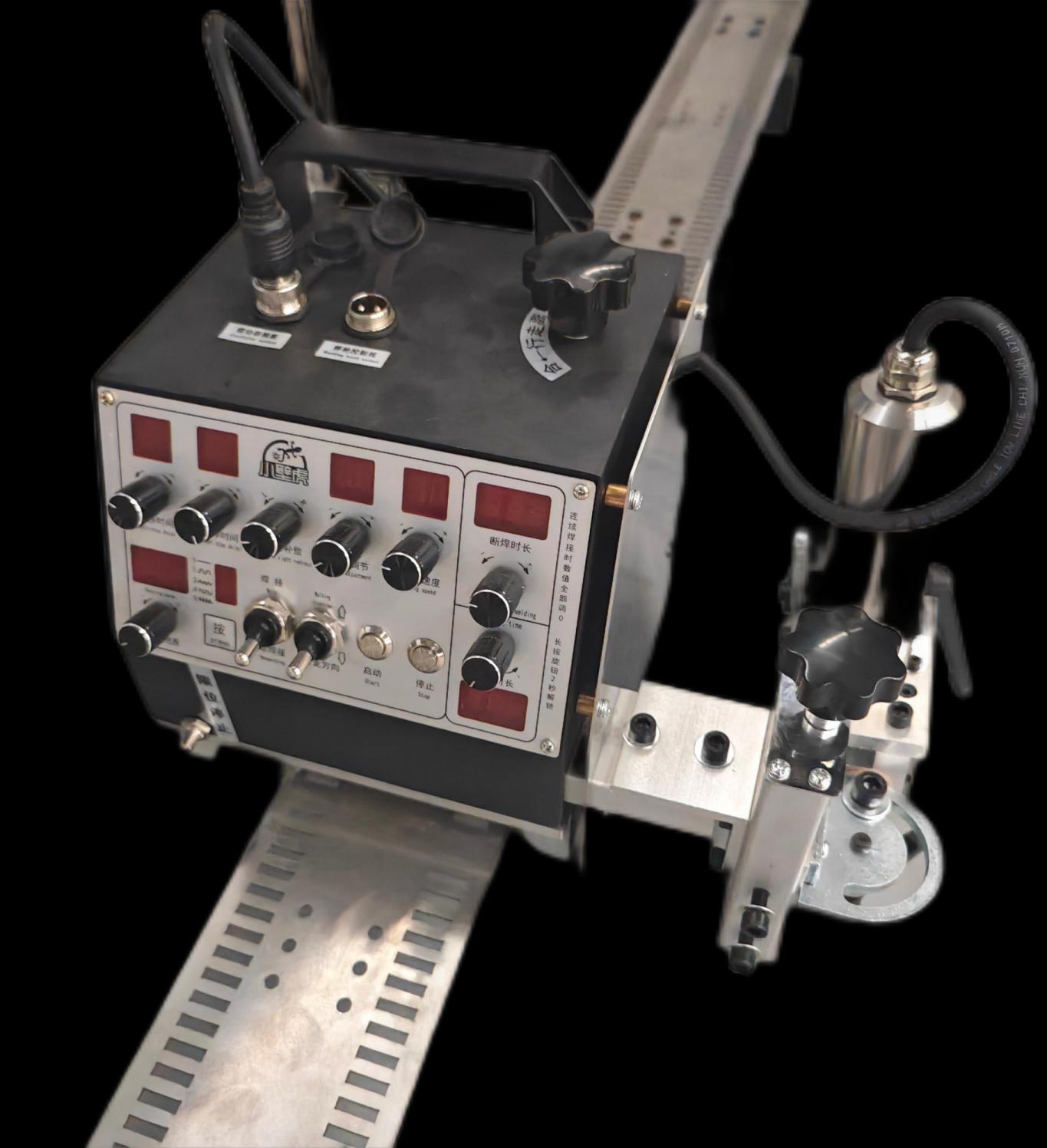
Oscillating welding carriage on a flexible stainless track, for curved shells, tank seams and vessels from Ø1800 mm.
View RG series →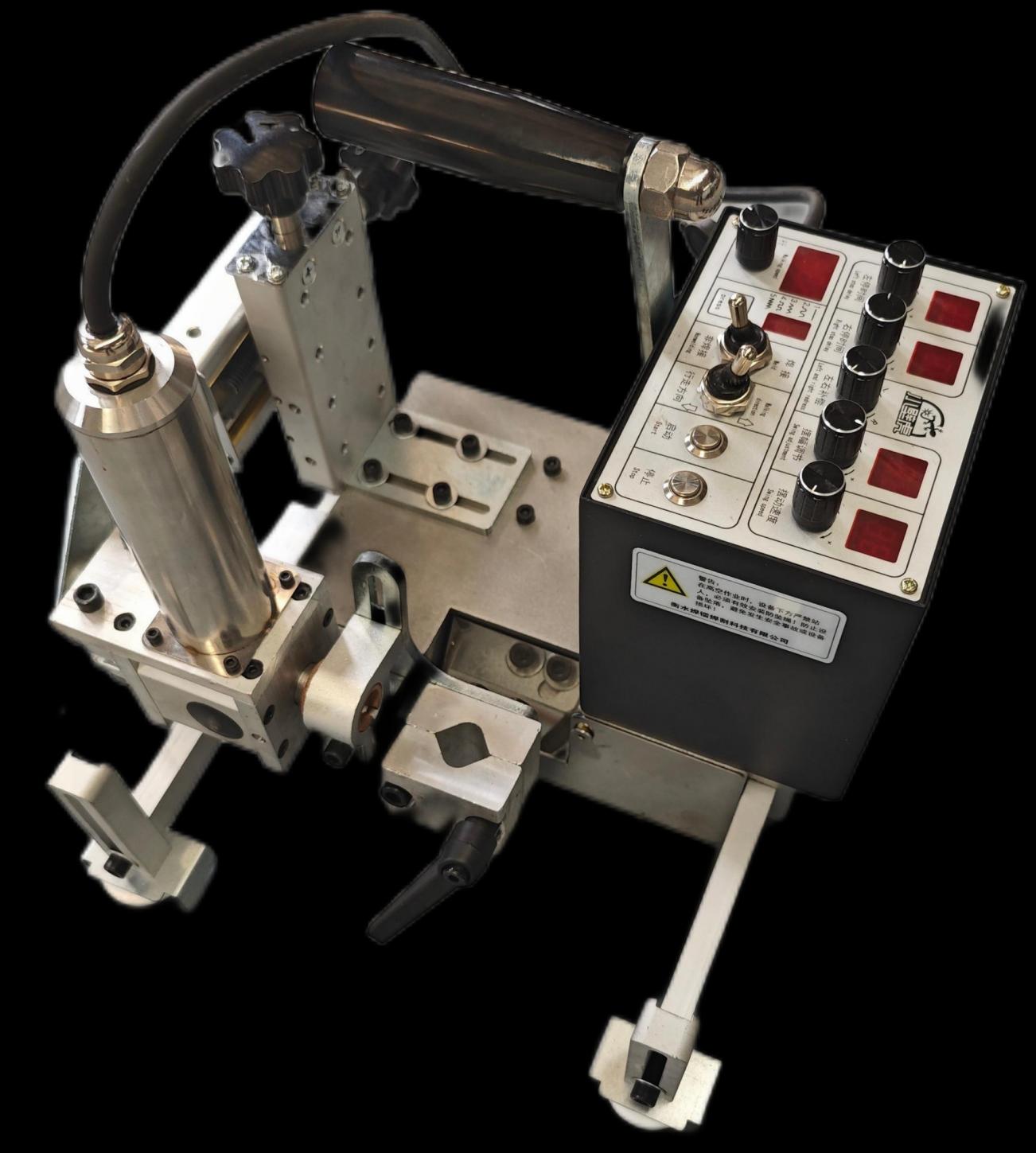
Automatic fillet welding machine for H-beams, box beams and columns. Twin-torch option for both sides in one pass.
View JJ / GJ series →Also available: HLGB25-108 automatic tube-to-tubesheet welding machine for boilers, heat exchangers and condensers.
The numbers buyers ask for after the first look. Full specification tables are on each product page.
| Parameter | RG | ZG | JJ / GJ | CX | HLGB |
|---|---|---|---|---|---|
| Drive mode | Chain-sprocket | Gear drive | Rubber wheel + permanent magnets | Magnetic-wheel drive | Servo motor + pneumatic expanding head |
| Travel / welding speed | 0-1100 mm/min | 0-1100 mm/min | 0-990 mm/min | 0-650 mm/min | 16.7 s per revolution |
| Track type | Flexible stainless belt 1784 × 102 × 2 mm | Precision linear rail SGR20, 1960 × 60 × 20 mm | Trackless (rides the workpiece) | Trackless (magnetic wheels) | Indexing on the tube sheet |
| Tracking / travel mode | Track-mounted, magnetic blocks | Track-mounted, magnetic bases | Guide wheels on the section | Free travel on steel surface | Fixed spindle rotation |
| Oscillation width | 0-32 mm | 0-32 mm | 0-30° angle | 0-32 mm | Not applicable |
| Oscillation speed | 0-2700 mm/min | 0-2700 mm/min | 0-2700 mm/min | 0-2700 mm/min | Not applicable |
| Torch adjustment | Vertical 65 mm / horizontal 90 mm | Vertical 65 mm / horizontal 90 mm | Vertical 65 mm / horizontal 140 mm | Vertical 65 mm / horizontal 125 mm | Vertical 60 mm / radial 50 mm |
| Workpiece range | From Ø1800 mm shells | Flat plate, long panels | Min. travel OD 3000 / ID 2900 mm | Pipe from Ø108 mm; inner from Ø700 mm | Tube ID Ø25-108 mm |
| Magnetic adhesion | V-type 12 T magnetic base, 35 kg holding force per block, min. suction thickness 3 mm | Permanent magnet wheels, full strength below 300 °C | High-temperature magnet wheels, below 580 °C | Magnetic-base cable bracket, 1500 mm radius | |
| Power supply | AC 110-220 V, 50/60 Hz (±10%); control DC 24 V; carriage consumption 96 W | AC 220 V, 50/60 Hz; control DC 24 V | |||
| Load capacity | Torch clamp Ø18-25 mm (200 A - 500 A torch) with wire feeder and cable support on the carriage | Dedicated 350 A torch, 5 m cable | |||
| Welding processes | CO2 / MAG / MIG continuous welding; TIG, plasma and flame cutting with torch adapter | Tube-to-tubesheet fillet (outside corner) welding | |||
| Wire feeder / power source compatibility | Works with your existing MIG/MAG power source, wire feeder and torch | Integrated wire feeder; separate power source | |||
| Carriage weight | 8.7 kg | 7.8 kg | 9.2 kg | 12.8 kg | 15 kg main unit / 70 kg cabinet |
| Ambient conditions | -20 to +60 °C, 0-90 % relative humidity | ||||
| Motor / drive power | DC 24 V drive motor, carriage consumption 96 W | Servo-driven spindle, main unit 15 kg | |||
| Track width | Flexible stainless belt, 102 mm wide | Precision linear rail, 60 mm wide (SGR20) | Trackless | Trackless | Indexing ring on the tube sheet |
| Control method | Integrated control panel: travel speed, oscillation width, oscillation speed and dwell time; DC 24 V control circuit | PLC control with stored weld programs | |||
| Welding positions covered | Flat and horizontal as standard; vertical and overhead with magnetic fixing (magnetic RG / ZG versions or the CX crawler) | Tube sheet plane, all tube orientations | |||
| Surface adaptability | Flat and curved carbon steel; suction-cup X-frame option for stainless plate; aluminium needs the track or clamp version | Tube sheet surface, carbon and stainless tubes | |||
Parameters are taken from the machine manuals. Need the full tables, options and packing data? Open the product pages or ask us for the datasheet PDF.
Shop-floor footage from our own machines - no renders, no stock video. Each clip notes the joint, the material and the process.
Not "20 years experience, best quality, competitive price". Here is what actually matters when the machine arrives.
We recommend the carriage according to your weld joint, workpiece and welding position - not the one we want to clear from stock.
Custom track length, torch holder, oscillation system and control configuration built to your workpiece.
Compatible with mainstream MIG/MAG welding systems and wire feeders. Send us your machine model and we will confirm before you order.
Carriage + track + oscillator + welding torch + wire feeder + welding power source, supplied as one working package if you need it.
Installation guidance, operation training material and spare parts support - direct to our engineering team, no middle layer.
Little Gecko® is an automatic welding carriage manufacturer and supplier based in China, working factory-direct: our engineering team in Beijing quotes, our workshop in Hengshui builds and test-welds, and the same team supports the machine after delivery. No trading layers and no reseller margin - a welding carriage factory you can talk to directly.
A welding carriage is a motorised trolley that carries a welding torch along a joint at a controlled travel speed. It holds the torch at a fixed angle and distance while the operator sets the parameters instead of steering the torch by hand. The result is a uniform bead, less rework and a welder who can run more than one station.
Nothing mechanical - it is the same class of equipment under two names. "Welding carriage" is the more common term in Asia, "welding tractor" and "rail welding carriage" are used more in Europe and North America, especially for the heavier track-guided units. Our ZG straight-track series is sold under both names.
Yes, but the fixing method matters. On a vertical face a rubber-wheel or gravity-mounted carriage will slip, so you need magnetic adhesion - either the magnetic-track version of the RG or ZG series, or the trackless CX magnetic crawler. The JJ / GJ fillet carriage is designed for vertical fillet work on beams and columns from the start.
Yes. The CX magnetic crawler uses high-temperature magnet wheels that hold full strength below 580 °C, so it stays on the plate in the overhead position and still travels at a controlled speed. For overhead work on carbon steel it is usually the simplest answer, because there is nothing to rig above you.
Only if the joint is long and straight, or you want the machine to follow a fixed line repeatably. The CX crawler and the JJ / GJ fillet carriage need no track at all. For RG and ZG the track is what holds the torch on line, and both use quick-plug joints - roughly 10 to 15 seconds to mount one rail.
Two answers depending on the seam. For longitudinal seams on shell courses and for curved plate, the RG flexible-track carriage - the flexible stainless belt follows the curvature. For circumferential seams on a finished or closed shell, or where no track can be laid, the CX magnetic crawler. Many tank shops run both.
The JJ / GJ fillet welding carriage, which rides directly on the beam with guide wheels and holds the torch at the correct angle and leg length. Dual-torch (Q2) versions weld both fillets of a beam in a single pass, and the CZ side-mount carriage covers corners where the machine cannot sit over the joint.
In most cases yes. The carriage only moves the torch and controls travel speed and oscillation - your MIG/MAG, CO2 or TIG power source does the welding. Torch clamp is Ø18-25 mm for 200 A to 500 A torches. Send us your power source and wire feeder model and we will confirm compatibility before you order.
Yes. Custom track length, torch fixtures, oscillation parameters, control configuration and even an expanding head made to your tube diameter for the HLGB machine. If your workpiece is unusual, send a drawing or a photo - most customization requests are answered within a day.
Work through five things in order: the workpiece, the welding position, the weld type, the welding process, and whether a track can be laid. That is exactly what the selector on this page does, and what our engineers do when an enquiry arrives. If it is still unclear, send us a photo of the joint.
Yes. The CX magnetic crawler uses magnet wheels that follow curvature, so it welds circumferential seams on pipes from Ø108 mm and on tank and vessel shells. On very large shells the RG flexible-track carriage is the other proven answer - the stainless belt is bent to the curvature first and the magnets hold it down. What magnetic fixing cannot do is stick to aluminium or austenitic stainless, which is where the track or clamp versions come in.
CO2, MAG and MIG continuous welding as standard, plus TIG, plasma cutting and flame cutting with the matching torch adapter. The carriage handles travel, oscillation and dwell; the welding itself is done by your power source. Torch clamp is Ø18-25 mm for 200 A to 500 A torches, and the carriage carries the wire feeder and cable support.
A welding carriage is track-guided or operator-guided - basic to semi-automatic, ideal for flat, long, repetitive joints. A crawler welding robot is trackless: magnetic-wheel drive, automatic tracking on the workpiece, high automation and better adaptation to curved or irregular surfaces. The carriage is the volume workhorse; the crawler is the step up for large-scale welding and all-position work. The comparison table above lists them side by side.
There is no single list price, because the welding carriage price depends on the series, the track length, the options (dual torch, magnetic track, custom torch holder, oscillation system) and the order quantity. We quote factory-direct from our own workshop - you are not paying a trading layer in between. Send the workpiece size, plate thickness and weld type and we will come back with the model and the quotation, usually within one working day.
Send a photo of your workpiece, the weld joint and the welding position. Our engineers will come back with the suitable solution - model, track length and the options you actually need. No obligation, no account, no form to fill in.
Prefer to send it by email? Attach the photo and we reply with a recommendation - usually within one working day.
Describe the workpiece and the seam — we will tell you which carriage fits, and where manual welding is still the better answer.